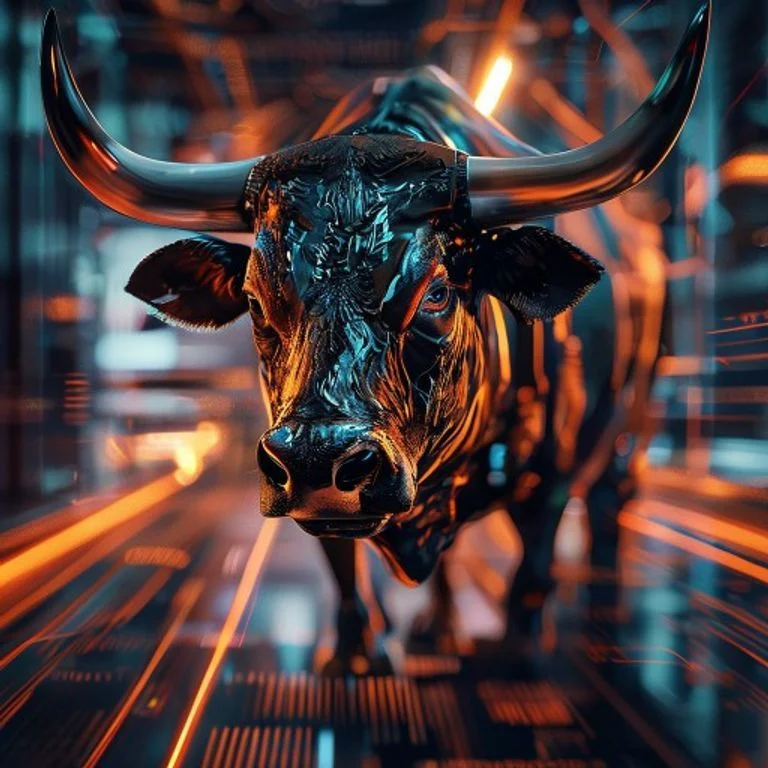
The era of retail-driven hype is officially over; the Institutional Supercycle has arrived, and while the masses are distracted by fleeting meme coins, the world’s most powerful whales are silently moving billions into three specific Web3 sectors before the 2026 explosion.
The Death of the Four-Year Cycle: Why This Bull Run is Different
For a decade, the "Four-Year Cycle" was the holy grail of crypto investing. But in 2026, that playbook has been set on fire. With the passing of the GENIUS Act and the global integration of Spot ETFs, liquidity is no longer a trickle—it is a flood. We are witnessing a fundamental shift from speculative volatility to structural dominance.
"2026 marks the year crypto matures from a niche financial subculture into the very substrate of global finance." — Global Asset Research Lead
Trend #1: RWA (Real-World Assets) – The $16 Trillion Wall Street Bridge
Institutional whales are no longer buying just 'digital gold'; they are tokenizing the world. Real-World Asset (RWA) tokenization is the secret weapon of BlackRock and Goldman Sachs. By bringing US Treasuries, private credit, and even blue-chip stocks like Nvidia on-chain, they are unlocking a market projected to hit $16 trillion by 2030.
- Whale Activity: Massive accumulation of yield-bearing RWA protocols.
- The 100x Trigger: The first "Self-Driving Treasury" that pays dividends directly to your wallet in real-time.
Trend #2: DePIN – Owning the Internet’s Hardware Layer
In 2026, GPU cycles are the new oil. Decentralized Physical Infrastructure Networks (DePIN) are allowing regular users to earn massive returns by providing the compute power needed for the AI revolution. Whales are quietly cornering the market on decentralized cloud providers and wireless networks.
Why Institutions Love DePIN:
- Tangible utility: These networks provide real-world services.
- Deflationary mechanics: Token burns tied to hardware usage.
- Barrier to entry: It is nearly impossible for competitors to bootstrap physical infrastructure without decentralized incentives.
Trend #3: AI-Agent Economies – The First Non-Human Financial Class
The most shocking trend of 2026 isn't a coin—it's a user. AI Agents are now transacting with one another on-chain without human intervention. This Machine-to-Machine Economy is creating unprecedented demand for stablecoins and autonomous liquidity protocols. Whales are accumulating the 'intelligence tokens' that power these agentic treasuries.
Desire: Why You Must Front-Run the 2026 Blueprint
The window for 100x returns is closing as the market professionalizes. If you wait for the headlines on CNBC, you are the exit liquidity. The 2026 Blueprint isn't about chasing green candles; it's about positioning your portfolio where the whales have already parked their capital. This is your chance to trade attention for equity before the next massive supply shock.
Ready to Monetize the Future?
Don't just watch the whales—become one. Join the FinTech Ambassador Club today to gain exclusive access to the automated tools, whale-tracking alerts, and viral strategies that the top 1% use to dominate the Web3 market. Stop trading time for money. Start printing influence.